
Tamegroute Green/Yellow Pottery: Origins, History and Technical Guide
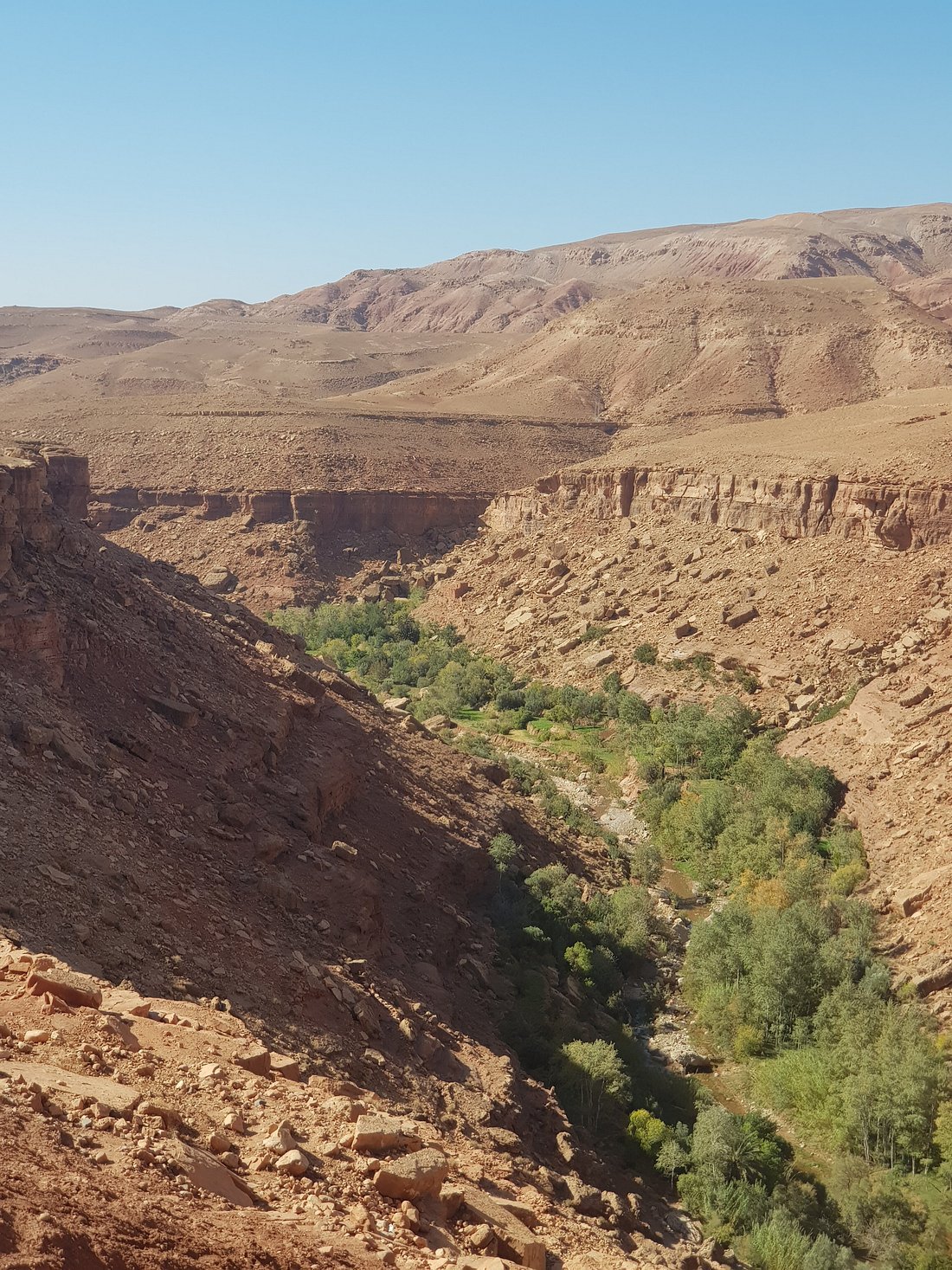
Tamegroute pottery is more than a ceramic style. It is a geological and historical anomaly. Located in the Draa River Valley, just 20 kilometers from Zagora, Tamegroute is known as "The Last Place Before the Desert." Here, in a climate where summer temperatures exceed 45°C, artisans have maintained a craft that defies modern industrial logic.
For 30 years, MoroccanStyled has acted as the bridge between these remote desert kilns and the global market. We operate from our consolidation center on Ourika Road in Marrakech to bring these fragile, historic pieces to the world.
The History: A Migration from Fes in 1687
The story of Tamegroute pottery is not originally a local one. It began in 1687, a pivotal year when skilled potters from Fes were invited to the Draa Valley. The invitation came from the Zawiya Nasiriyya, a powerful Sufi brotherhood that wanted to transform the village into a metropolis of religious learning.
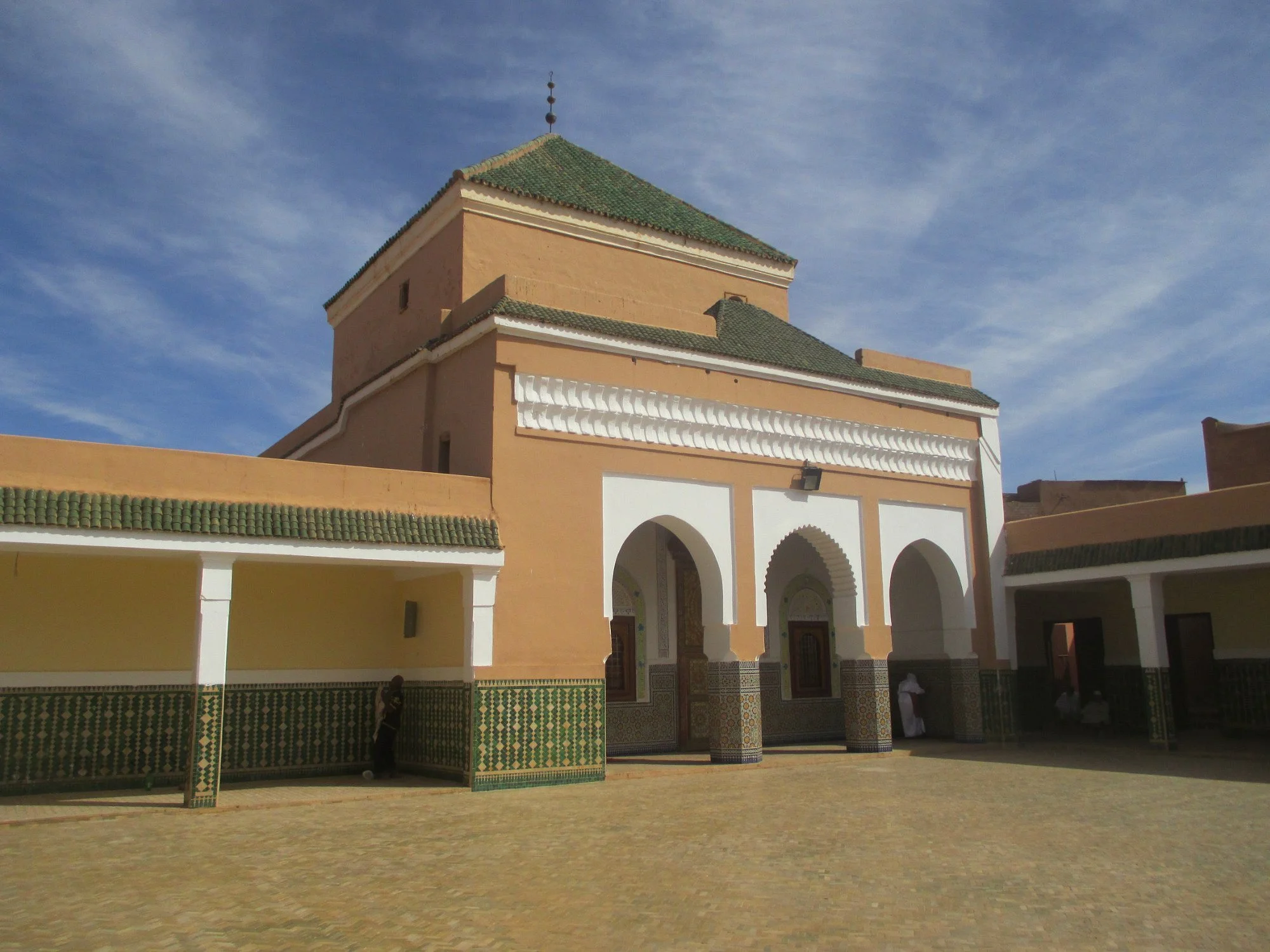
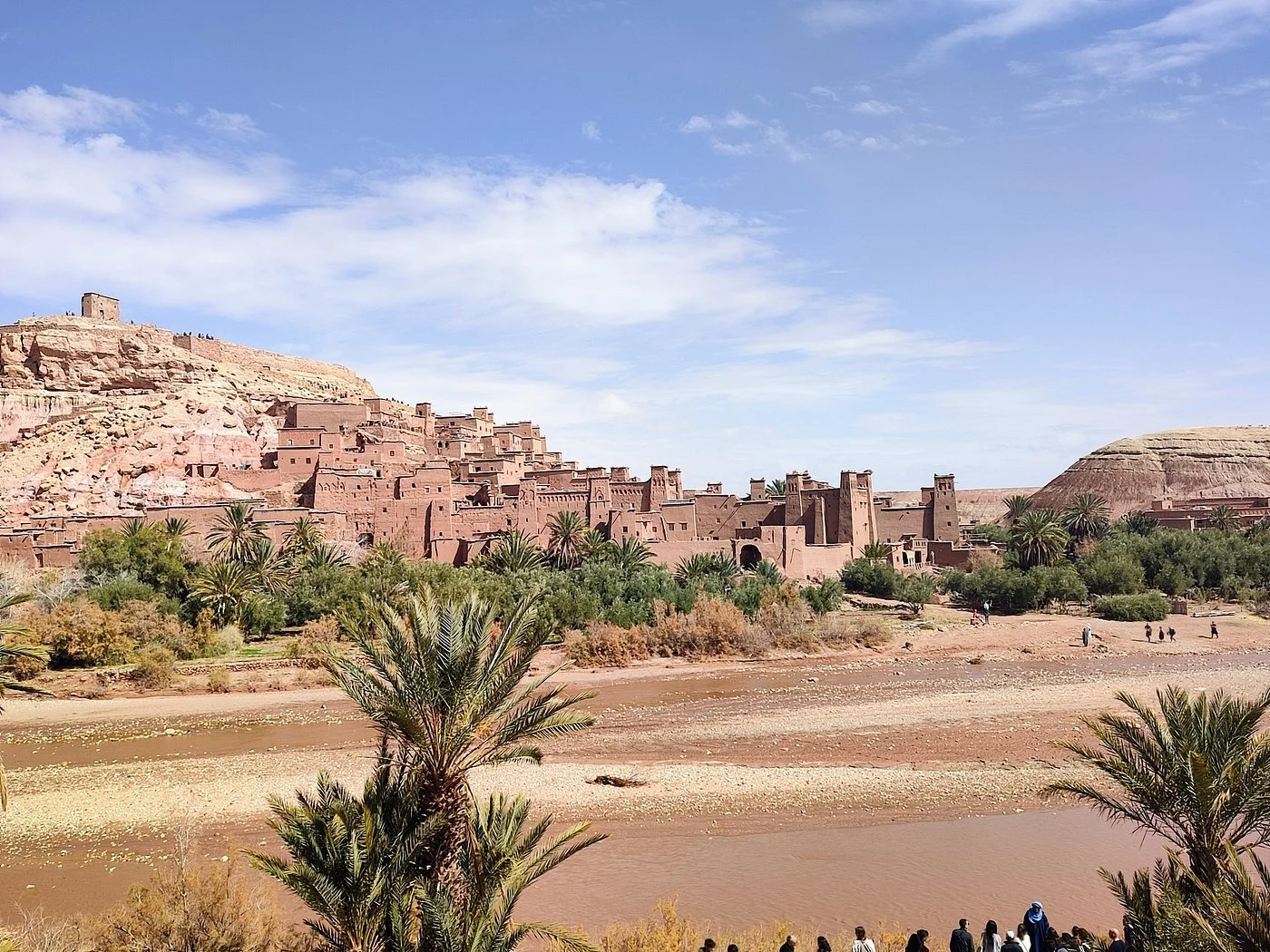
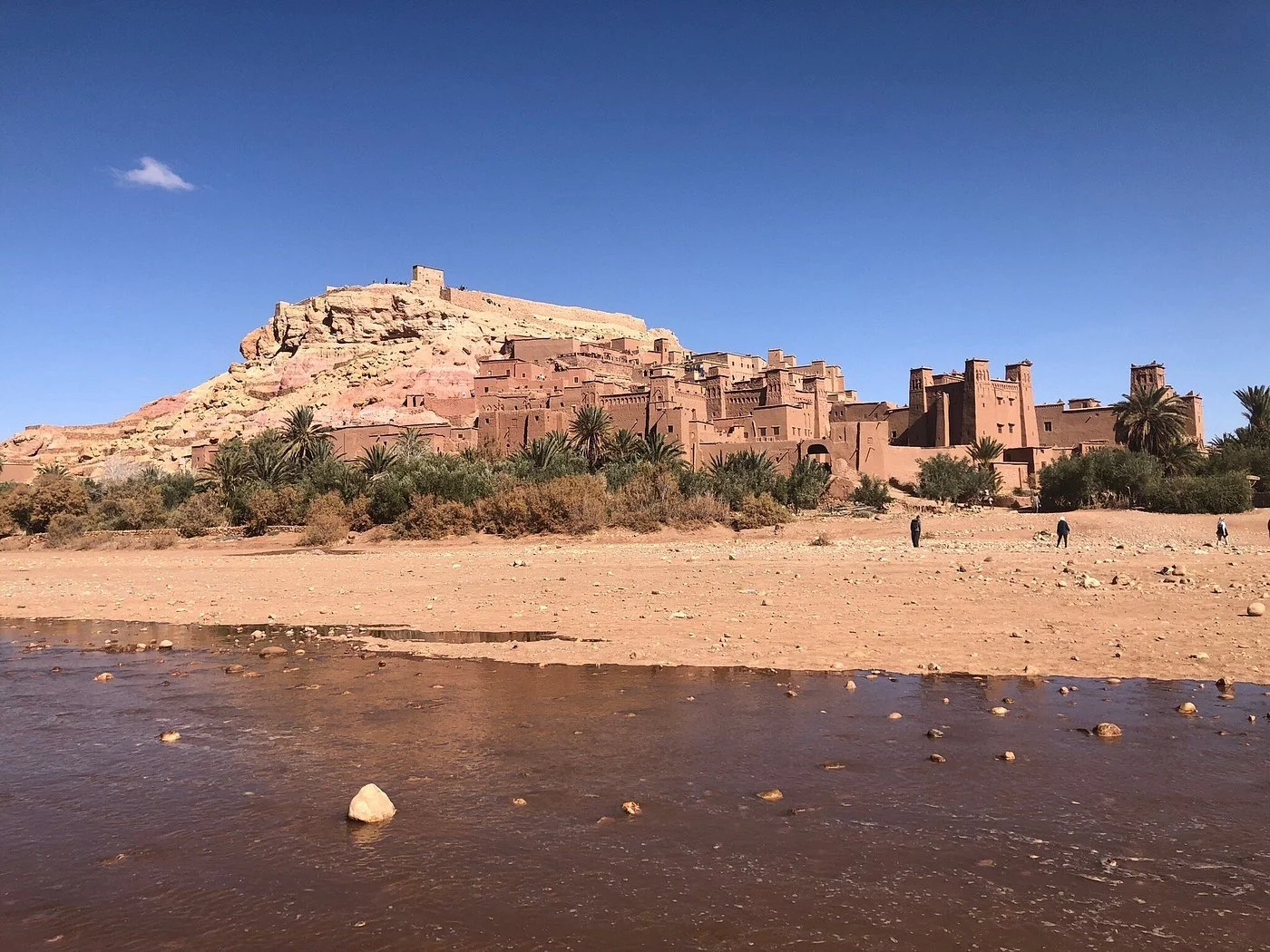
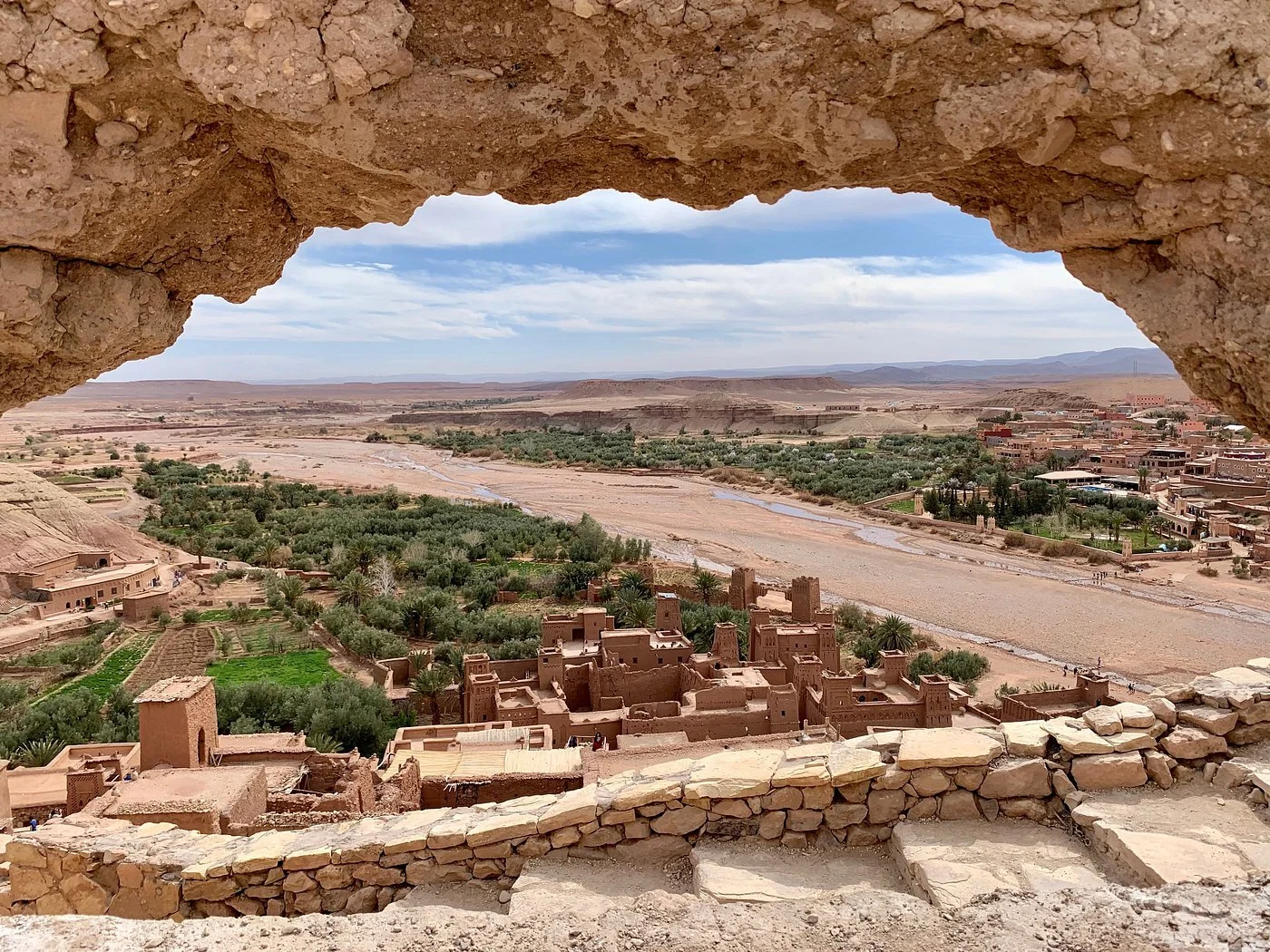
Zawiya Nasiriyya, Tamegroute, Morocco
These Fassi masters arrived expecting to make their refined white ceramics. Instead, they found only the coarse, iron-rich soil of the Sahara. Forced to adapt their sophisticated techniques to this "wild" clay, they created a hybrid style. The forms remained reminiscent of urban ware (chalices and footed bowls), but the execution became thicker, heavier, and more primitive. This collision of Fassi pedagogy and Saharan geology gave birth to the Tamegroute tradition we know today.
The Raw Material: Mining the River Banks
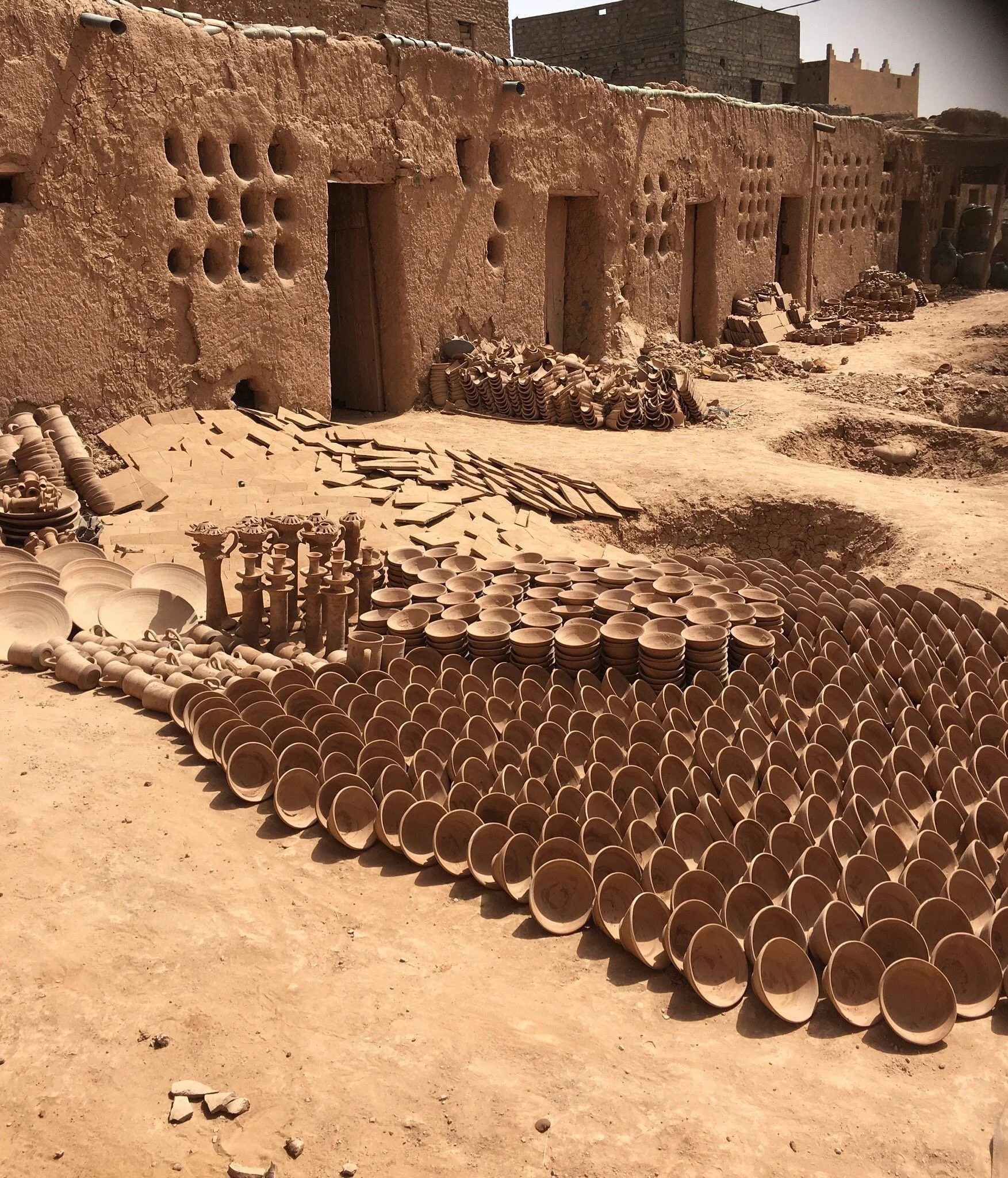
The character of every Tamegroute vase, bowl or candle holder comes from the clay itself. It is not purchased in bags but mined directly from the alluvial deposits of the Draa River.
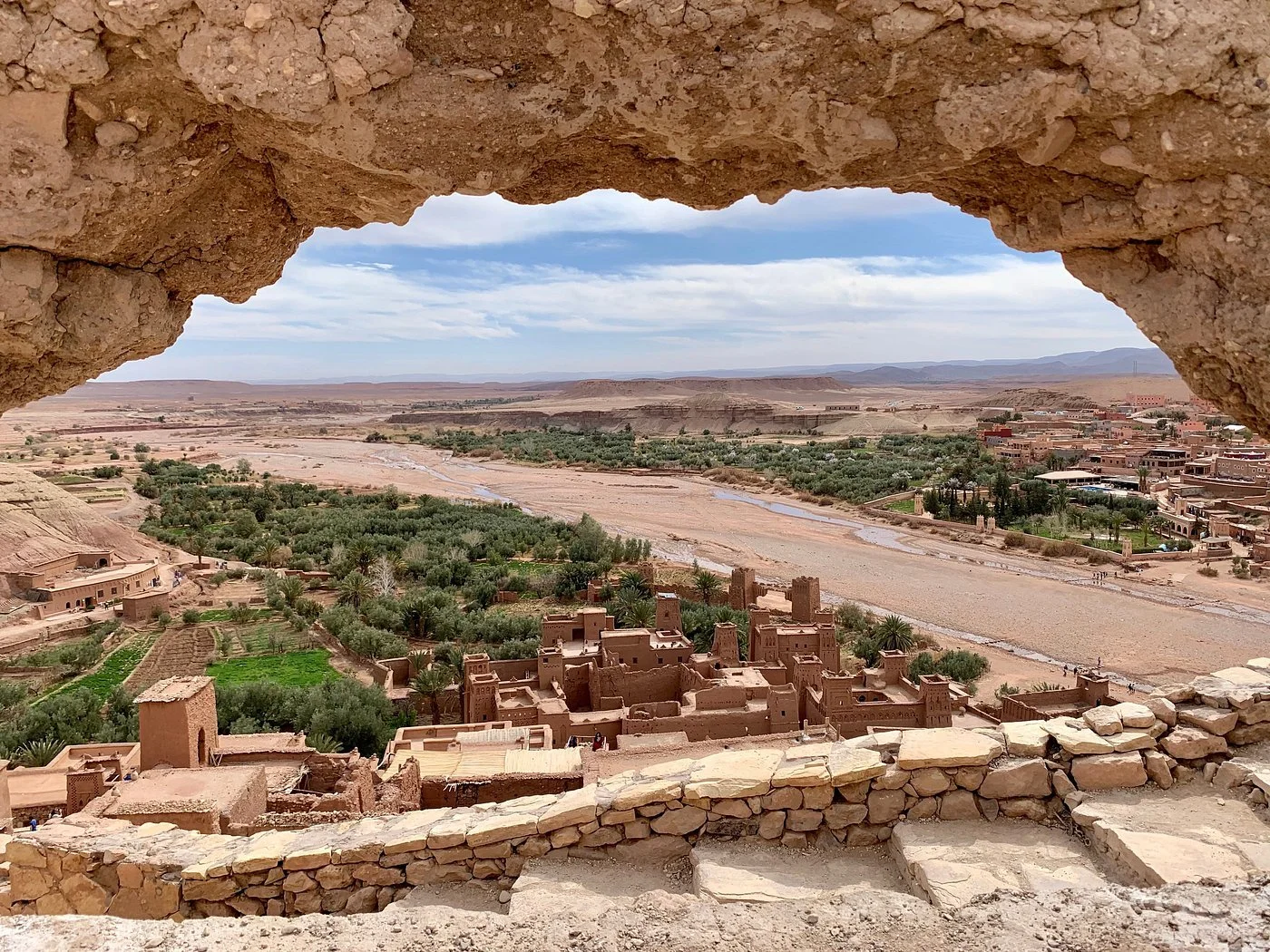
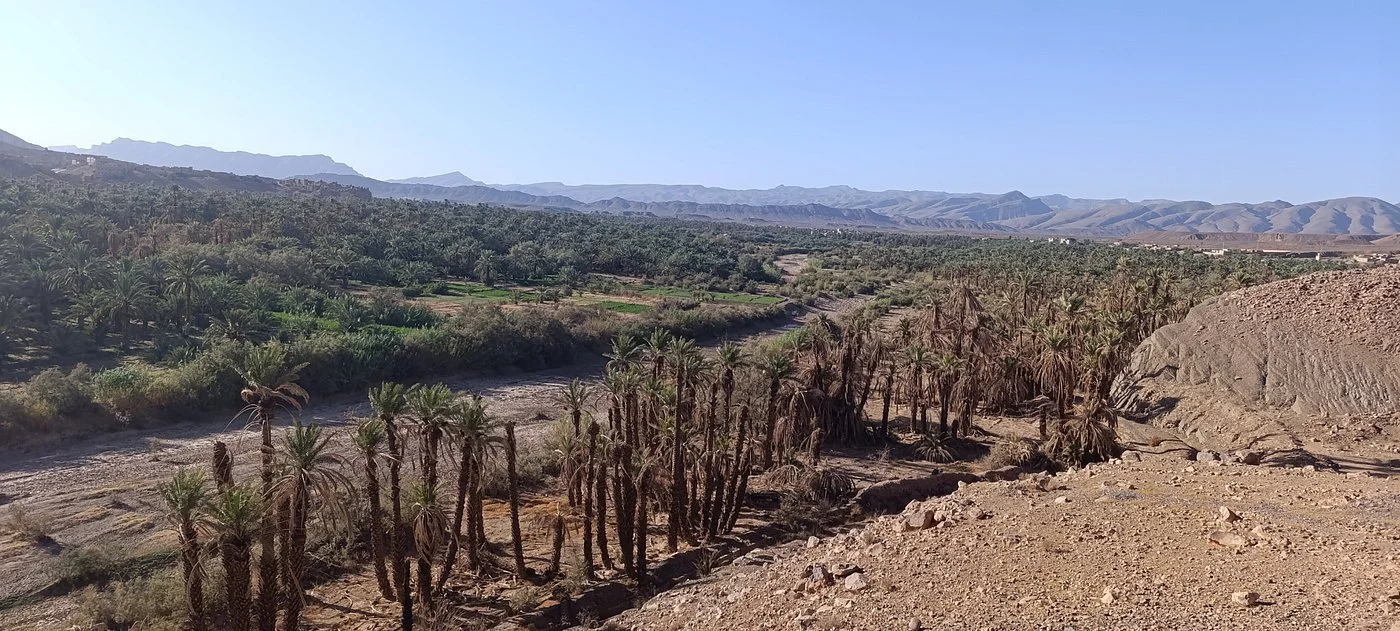
Daraa River, South Morocco
The extraction process is arduous and dangerous. Artisans dig vertical shafts up to 10 meters deep into the riverbanks to reach the purest veins of clay. This dense, mineral-heavy earth is hoisted to the surface in baskets and transported to the potters' district (the ksar) on donkey carts. Before it can be thrown on the wheel, it is soaked in pits to break down the hard earth, then "foot wedged" by artisans who stomp the clay to remove air pockets and align the particles for strength.
The Alchemy of the Glaze: "Dead Stone" and Barley Flour
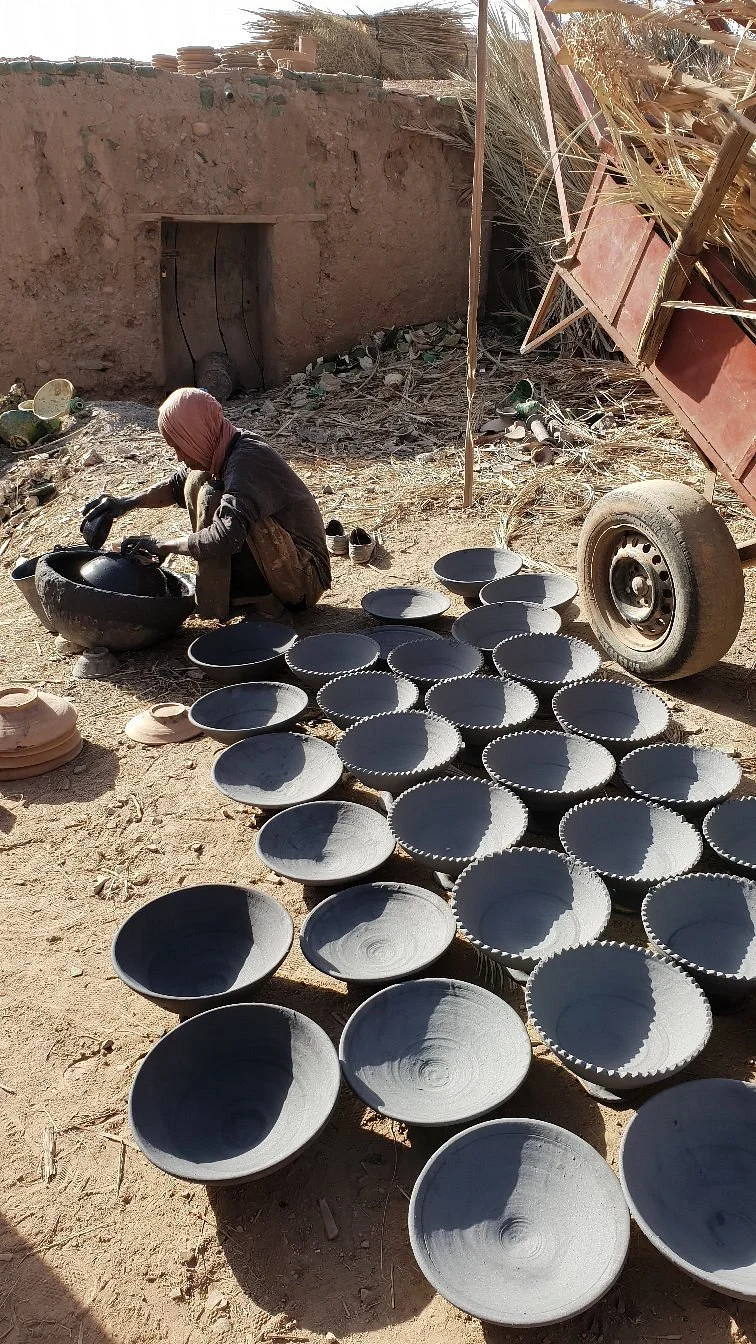
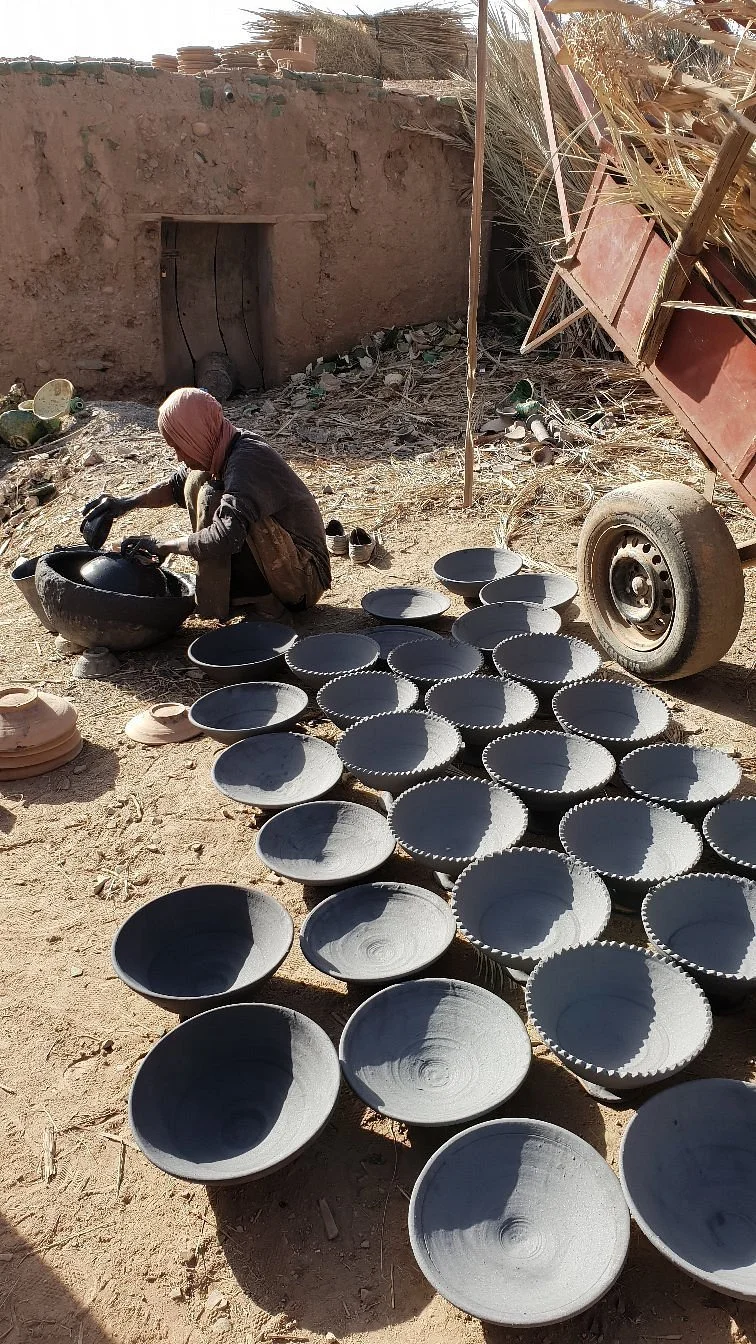
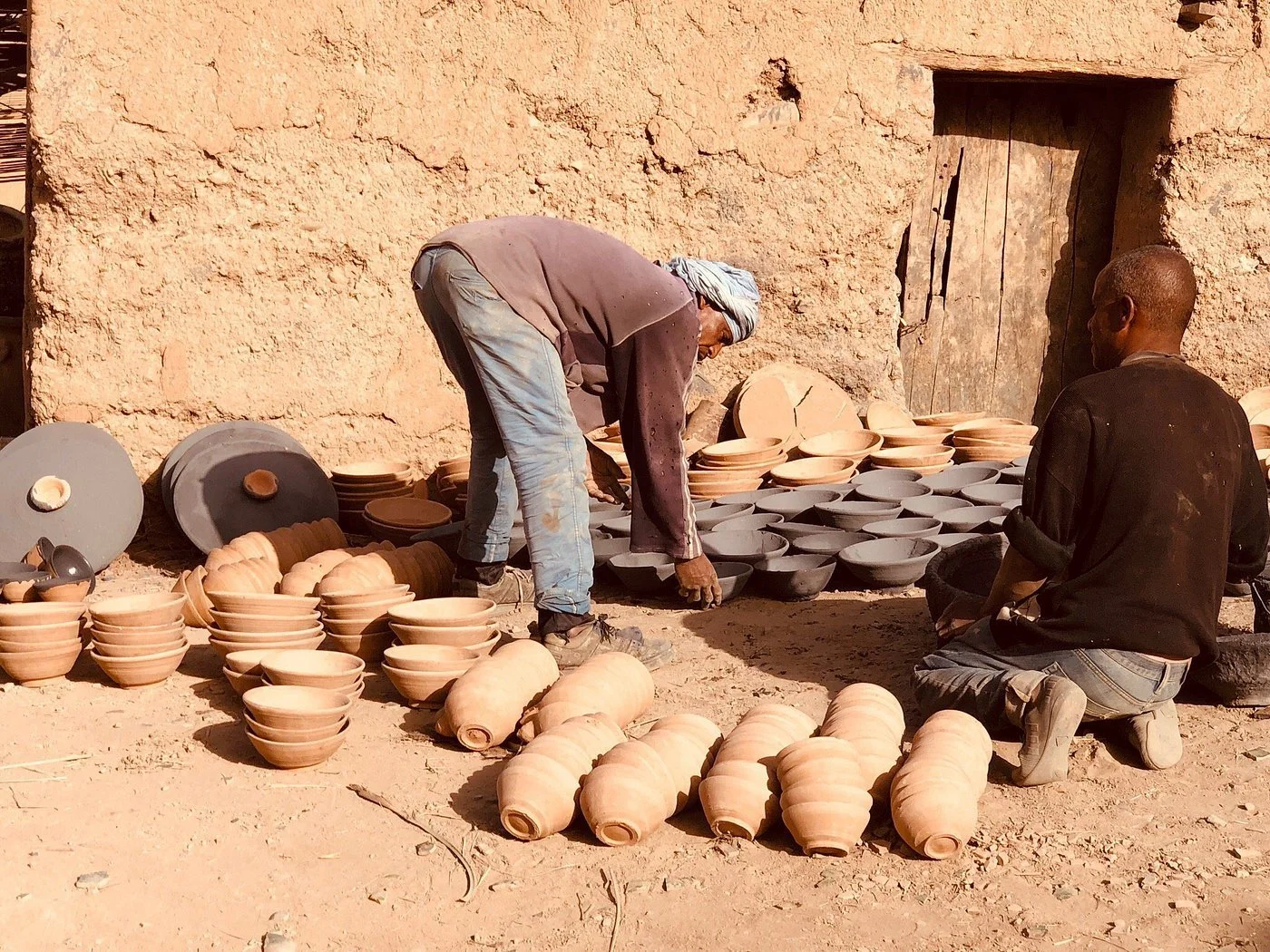
Tamegroute Bowls Before Firing
The most frequent question we receive from designers concerns the secret of the Tamegroute glaze. It is a mixture that has been passed down through specific families for centuries. The "magic" comes from three distinct elements found in the deep research of the region.
Manganese (The "Dead Stone"): The depth of the color comes from a mineral locally called Khol or "Dead Stone"; used by berber women to make traditional eyeliner powder. Mined in the Ouarzazate region, this manganese dioxide provides the darkness and the characteristic black or brown flecks seen on the surface.
Copper Oxide: To achieve the signature emerald green, artisans add raw copper or copper oxide. This interacts with the glaze to create the vibrant green hue.
Barley Flour: Perhaps the most surprising ingredient is agricultural. The potters mix barley flour into the liquid glaze. The gluten in the flour acts as a binder, creating a thick, sticky paste that adheres to the raw clay before firing. It burns away completely in the kiln but is essential for the application process.
The 11 Families of the Guild
While local legend often speaks of "Seven Families" who guard the secret, modern surveys confirm that there are currently eleven active families in the guild.
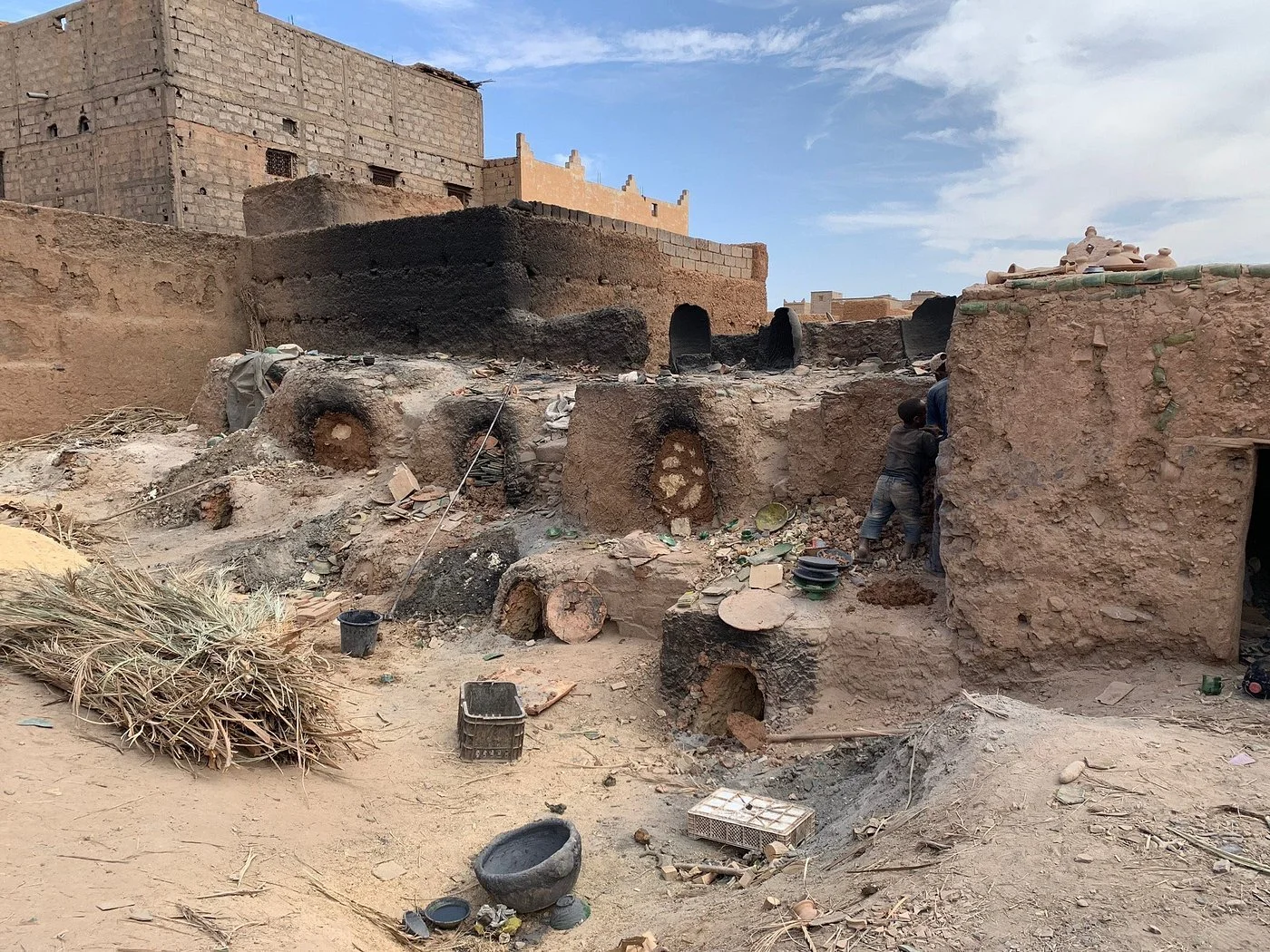
These families, such as the prominent Ait Dani and Ait Bani lineages, live and work within the dedicated Potters' Ksar. The prefix "Ait" indicates their deep integration into the Amazigh tribal structure over the centuries. They operate as Tamegroute cooperatives, often sharing the large firing kilns while maintaining their individual workshops. When you source through us, you are supporting this hereditary guild structure directly.
Pyrotechnology: The Imperfection is the Point
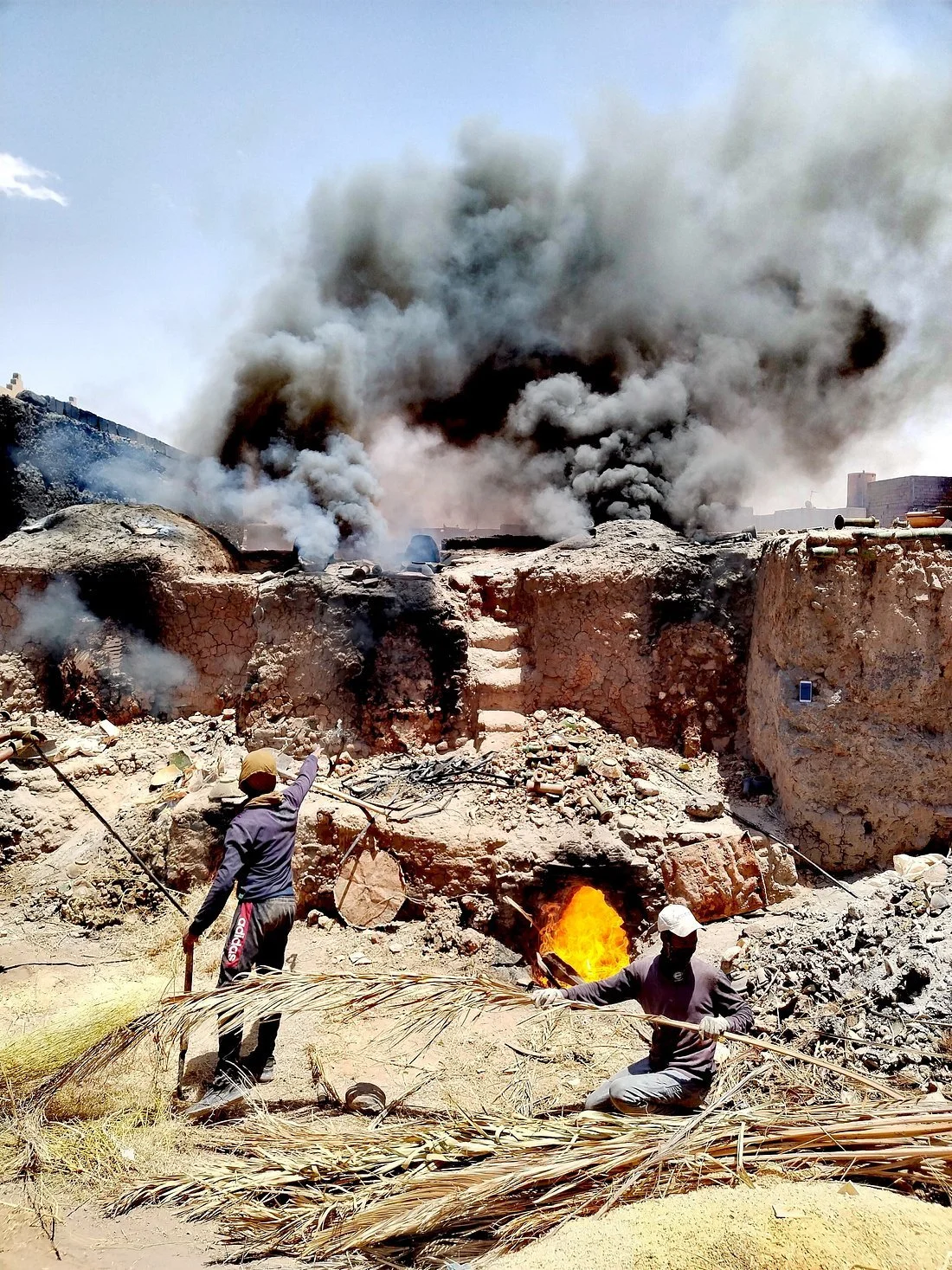
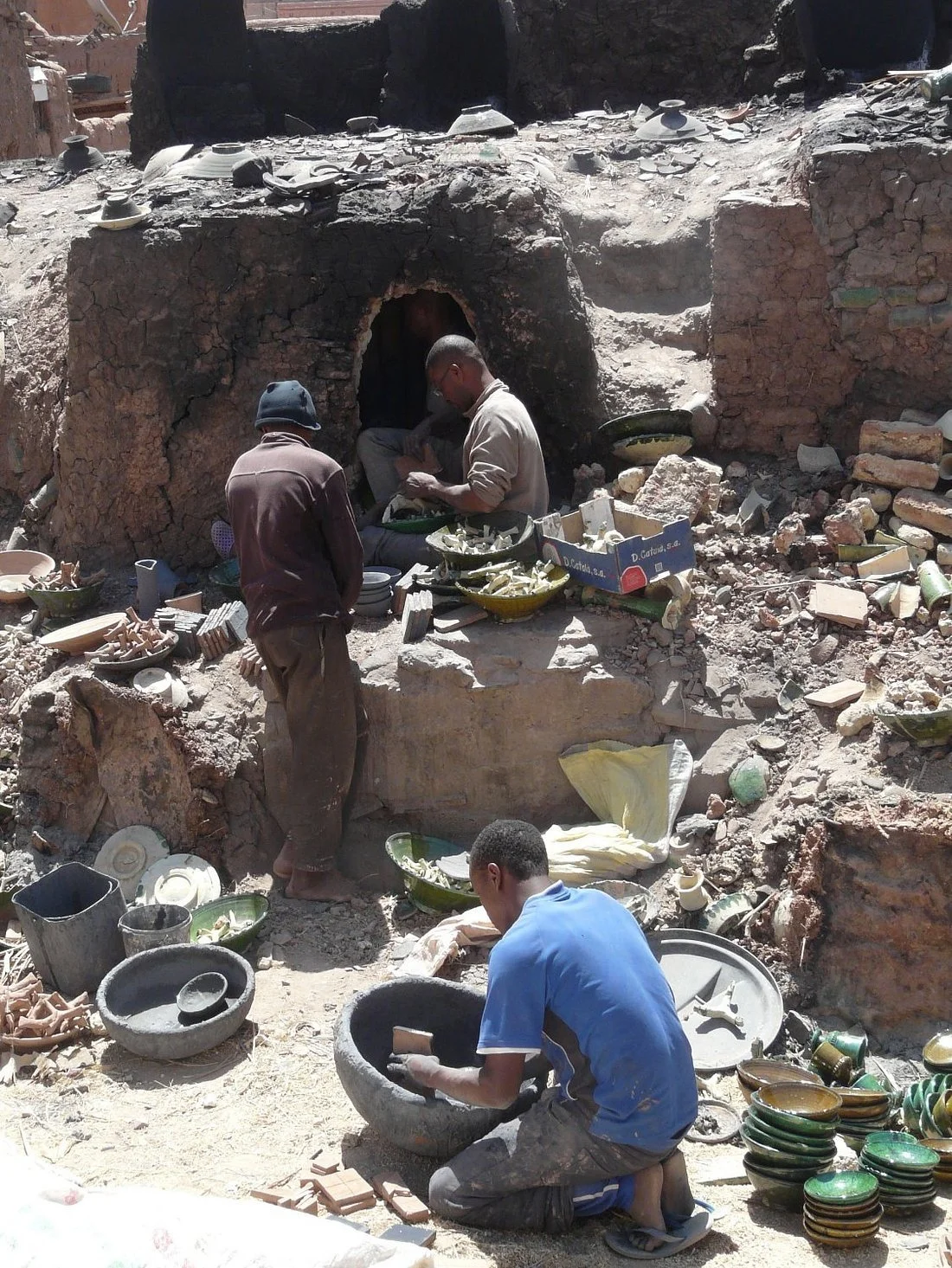
Tamegroute pottery is fired in traditional updraft wood-burning kilns. The fuel source is strictly biomass, consisting of palm fronds, tamarisk branches, and eucalyptus.
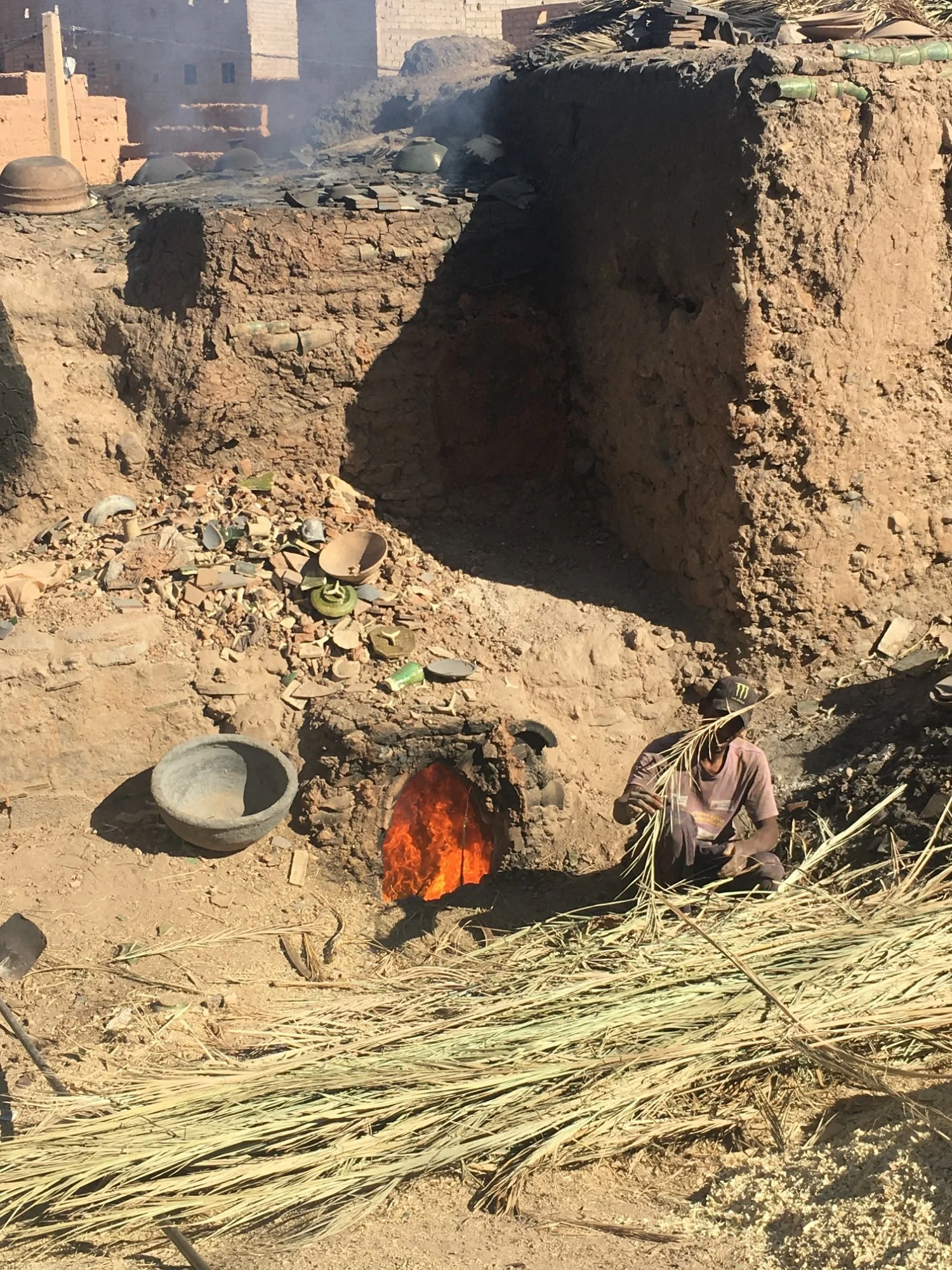
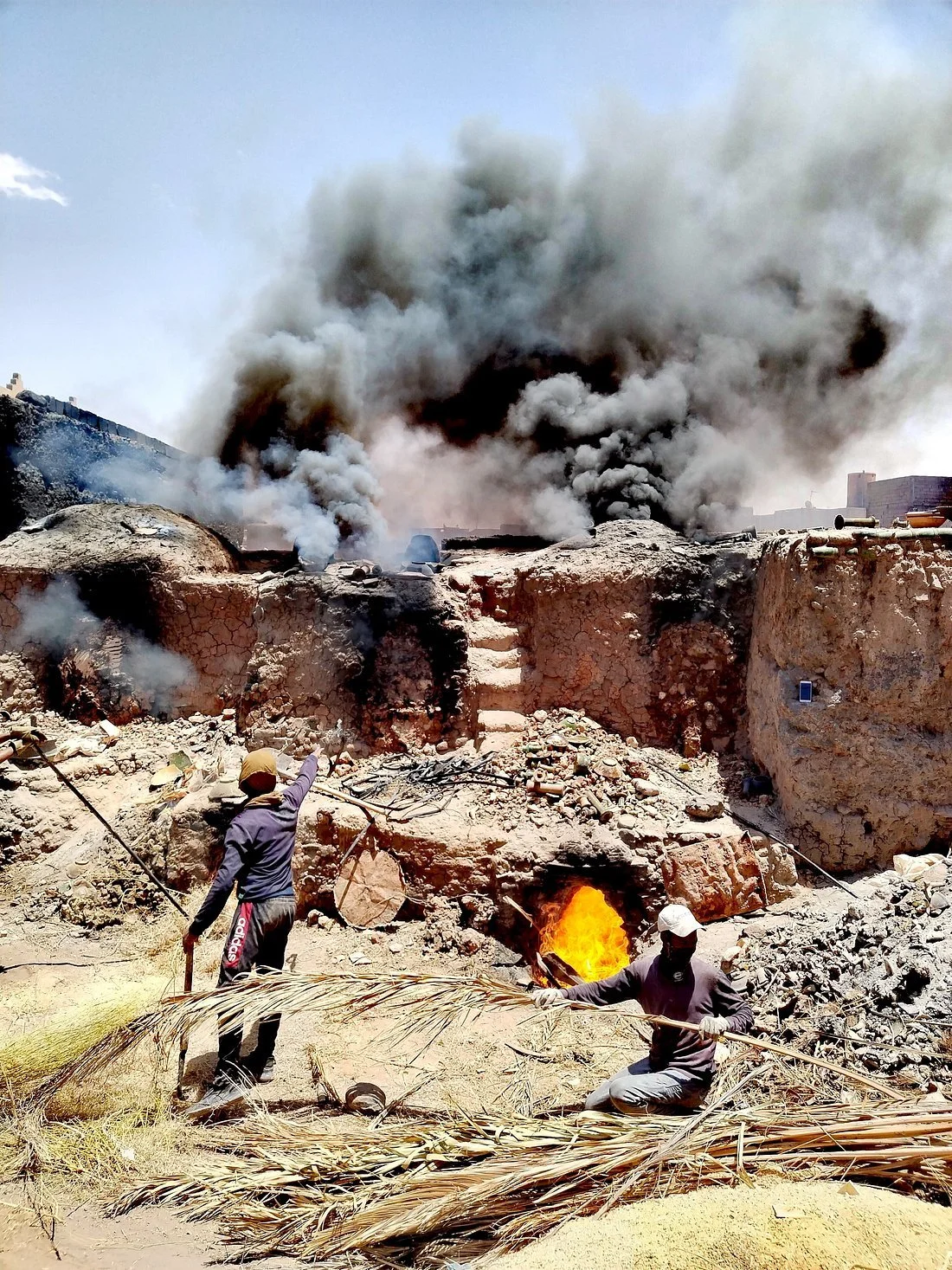
The firing cycle is short but intense, lasting about 5 hours and reaching temperatures of 1100°C. The use of palm fronds creates a "reduction atmosphere" inside the kiln. The fire, starving for oxygen, strips molecules from the metal oxides in the glaze. This chemical violence is what causes the glaze to run, drip, and occasionally turn metallic or black.
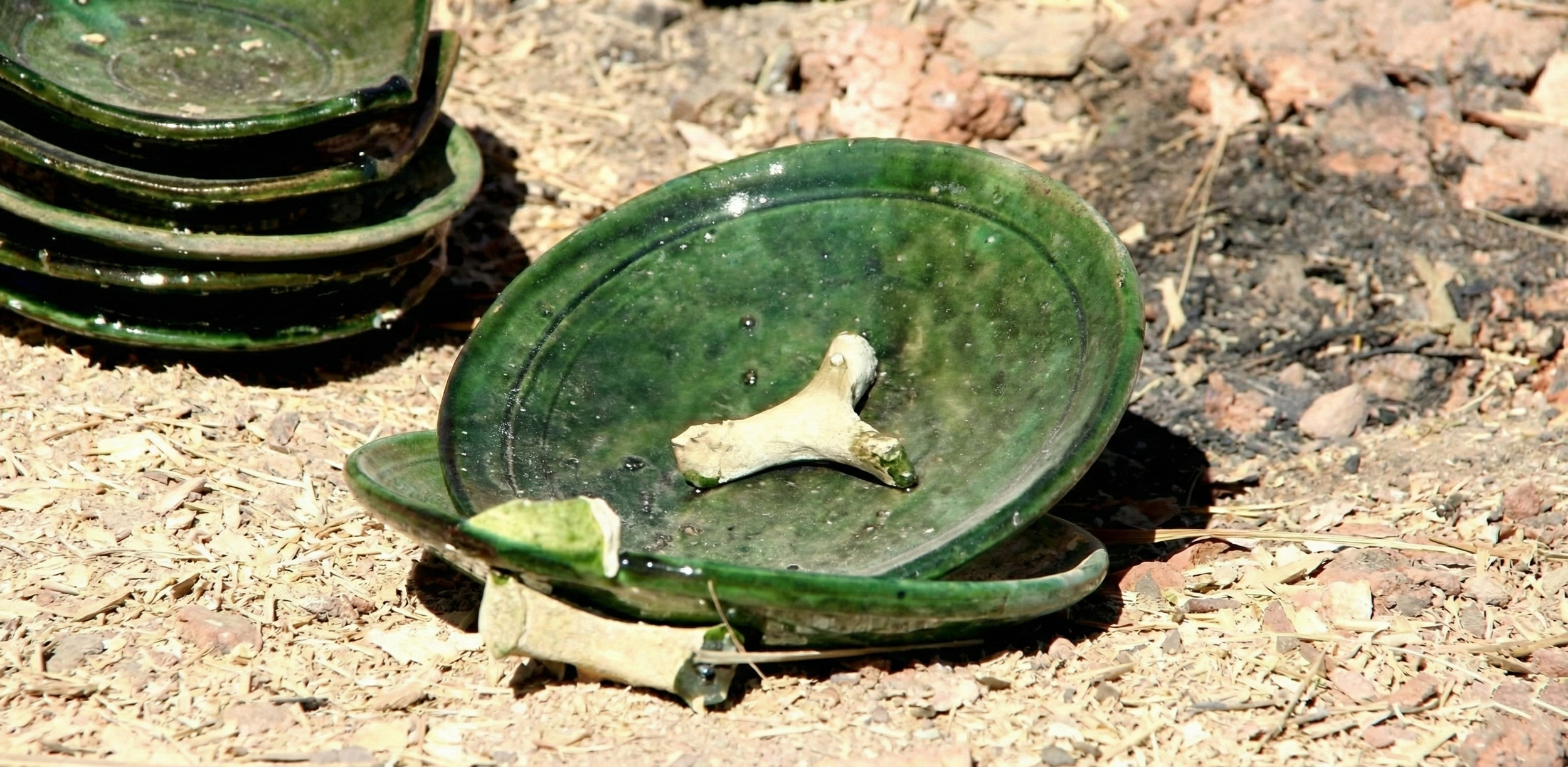
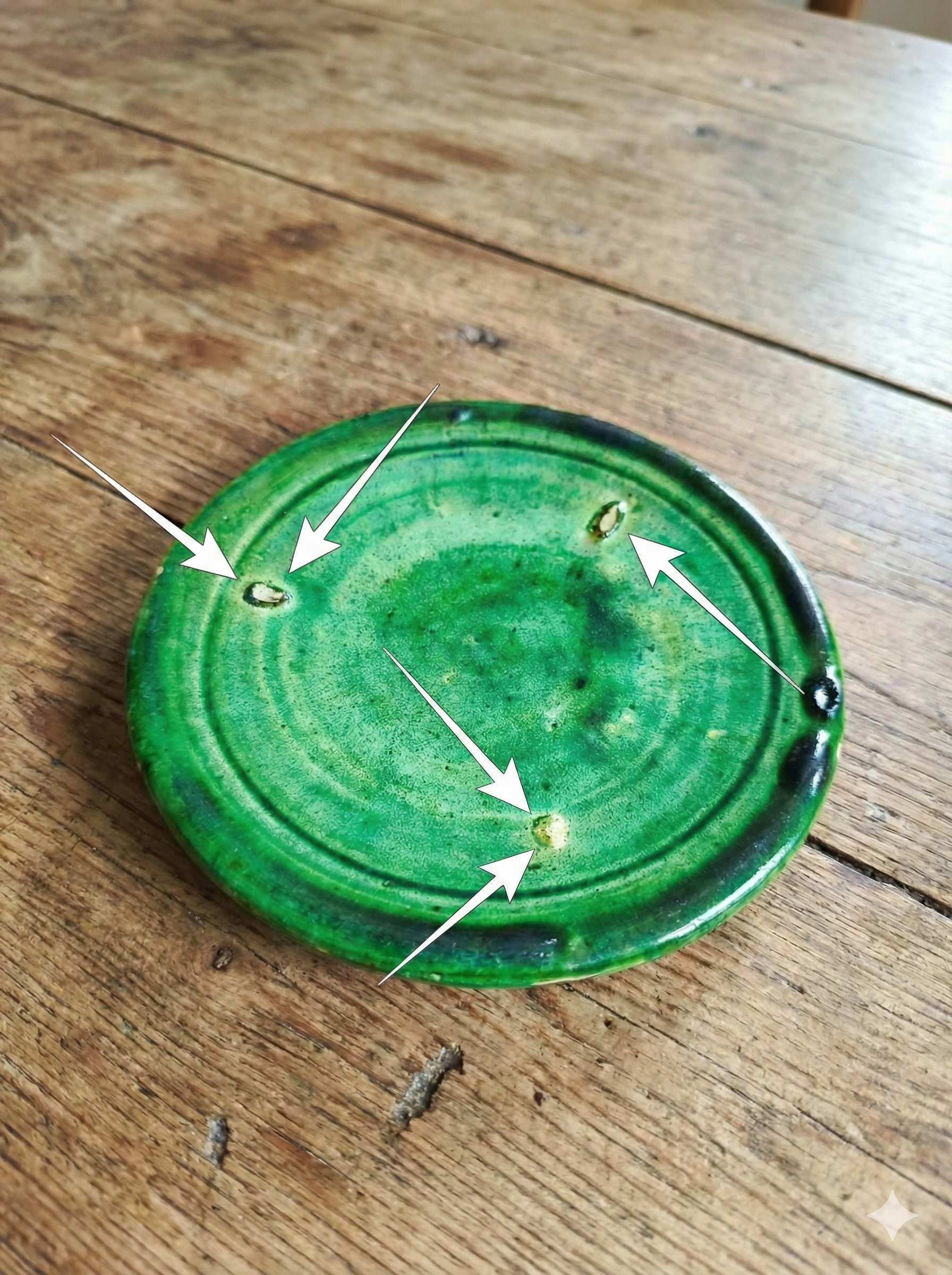
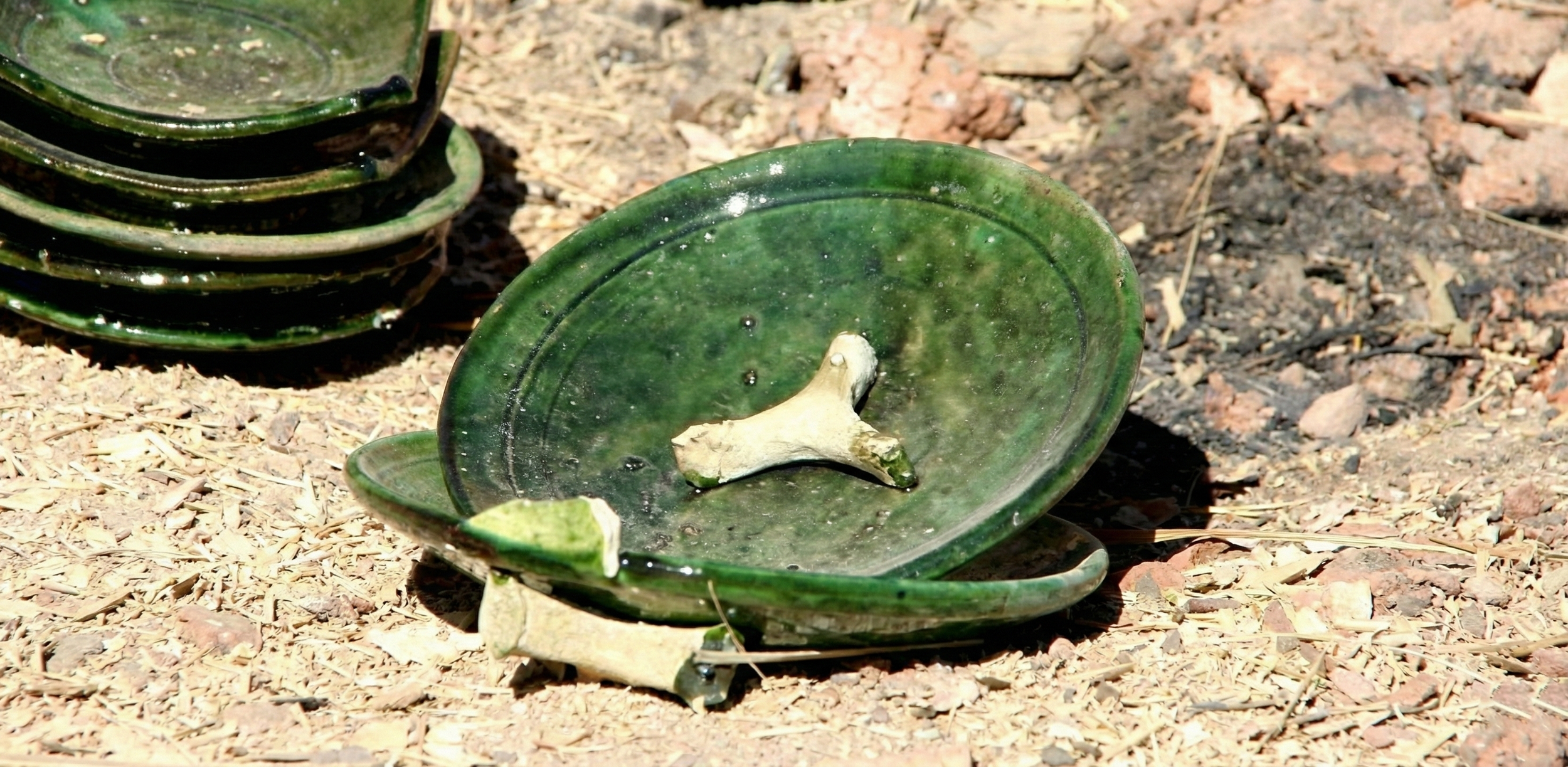
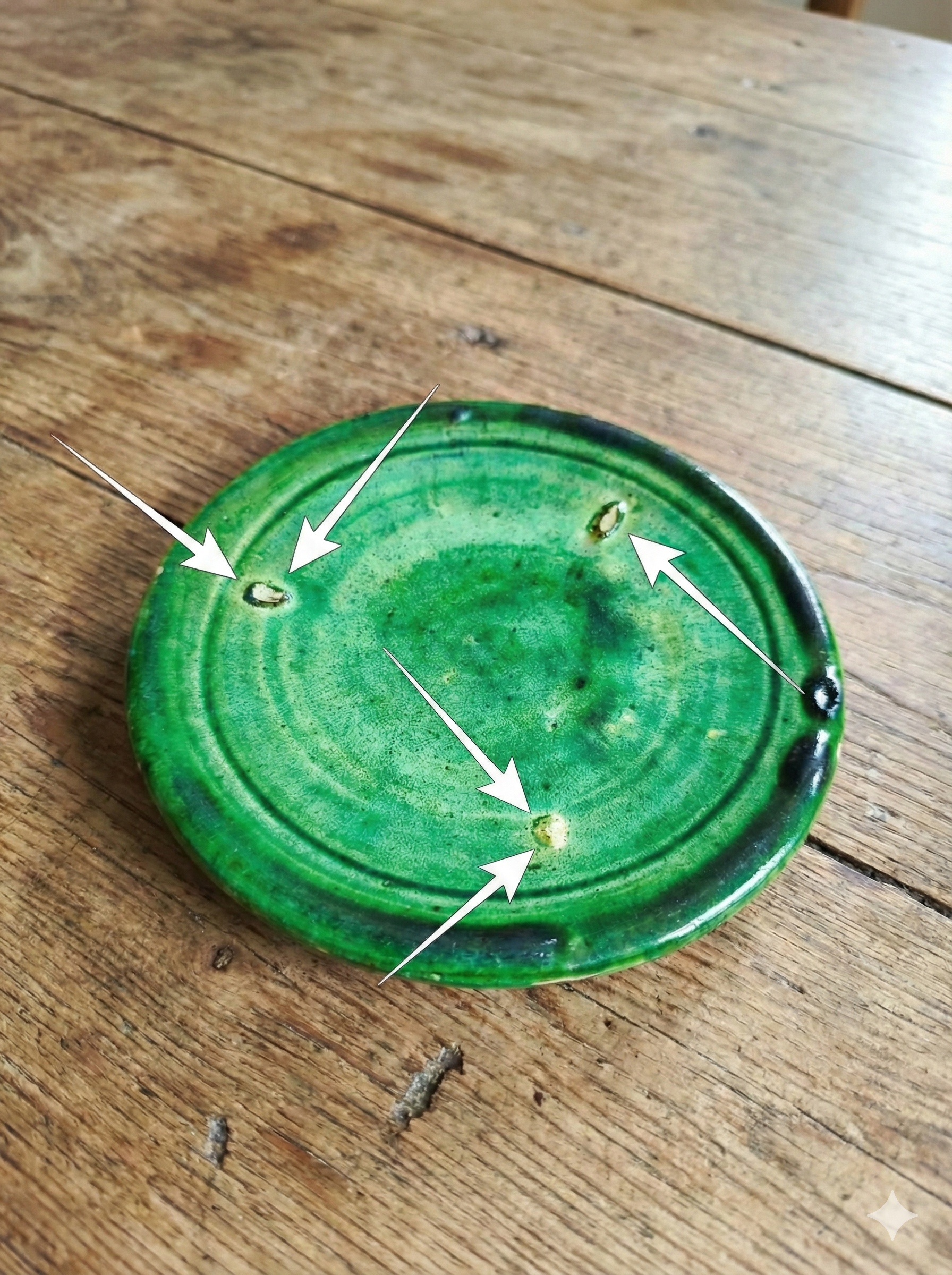
The Three Scars: You will notice three small marks on the inside of almost every Tamegroute bowl or plate. These are not defects. They are the scars left by the clay tripods (stilts) used to stack the items in the kiln. Without these stilts, the melting glaze would fuse the pots together into a solid block. In the world of Wabi-Sabi design, these scars are the ultimate proof of authenticity.
Inside the Workshop: The Subterranean Wheel
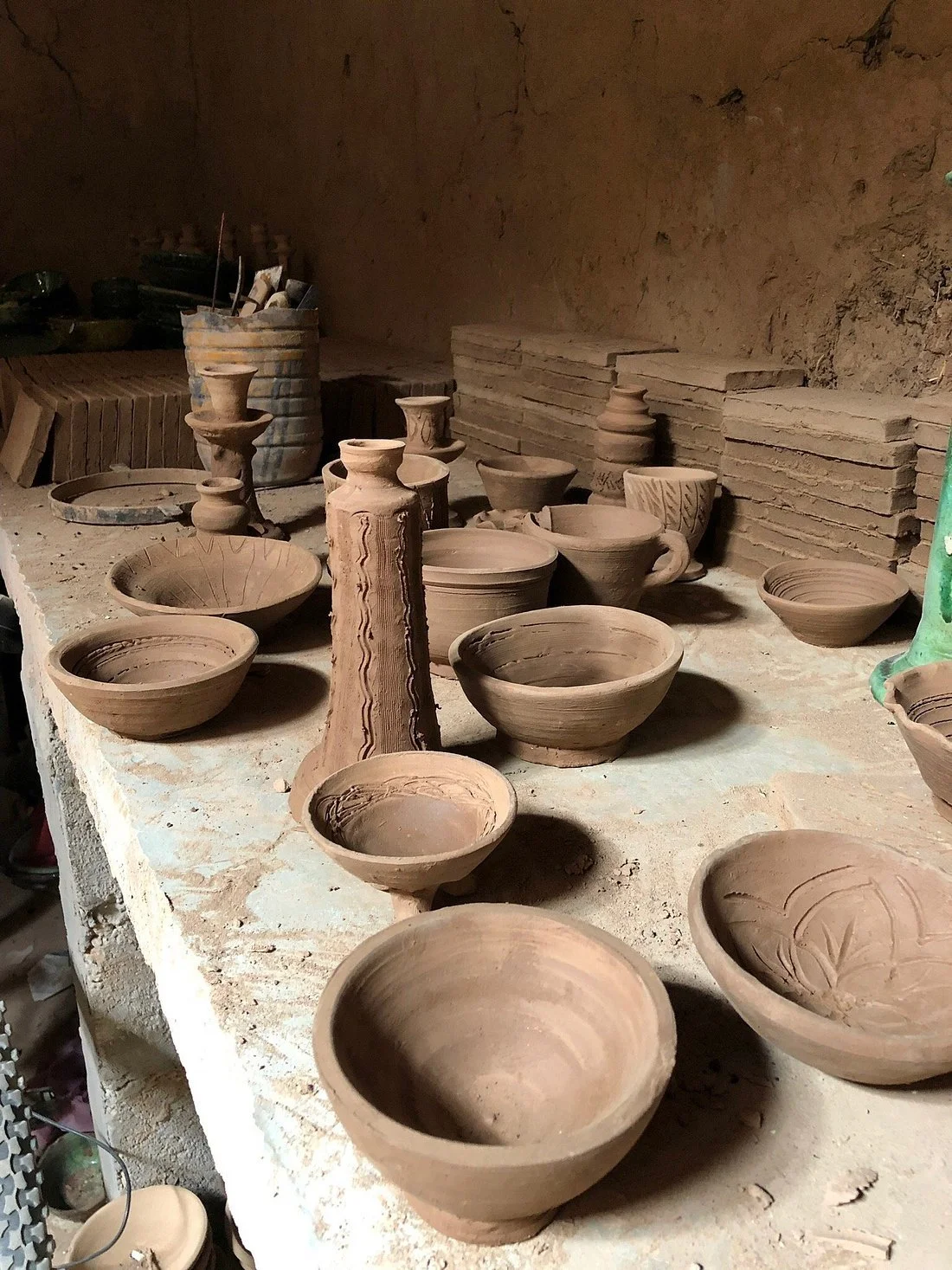
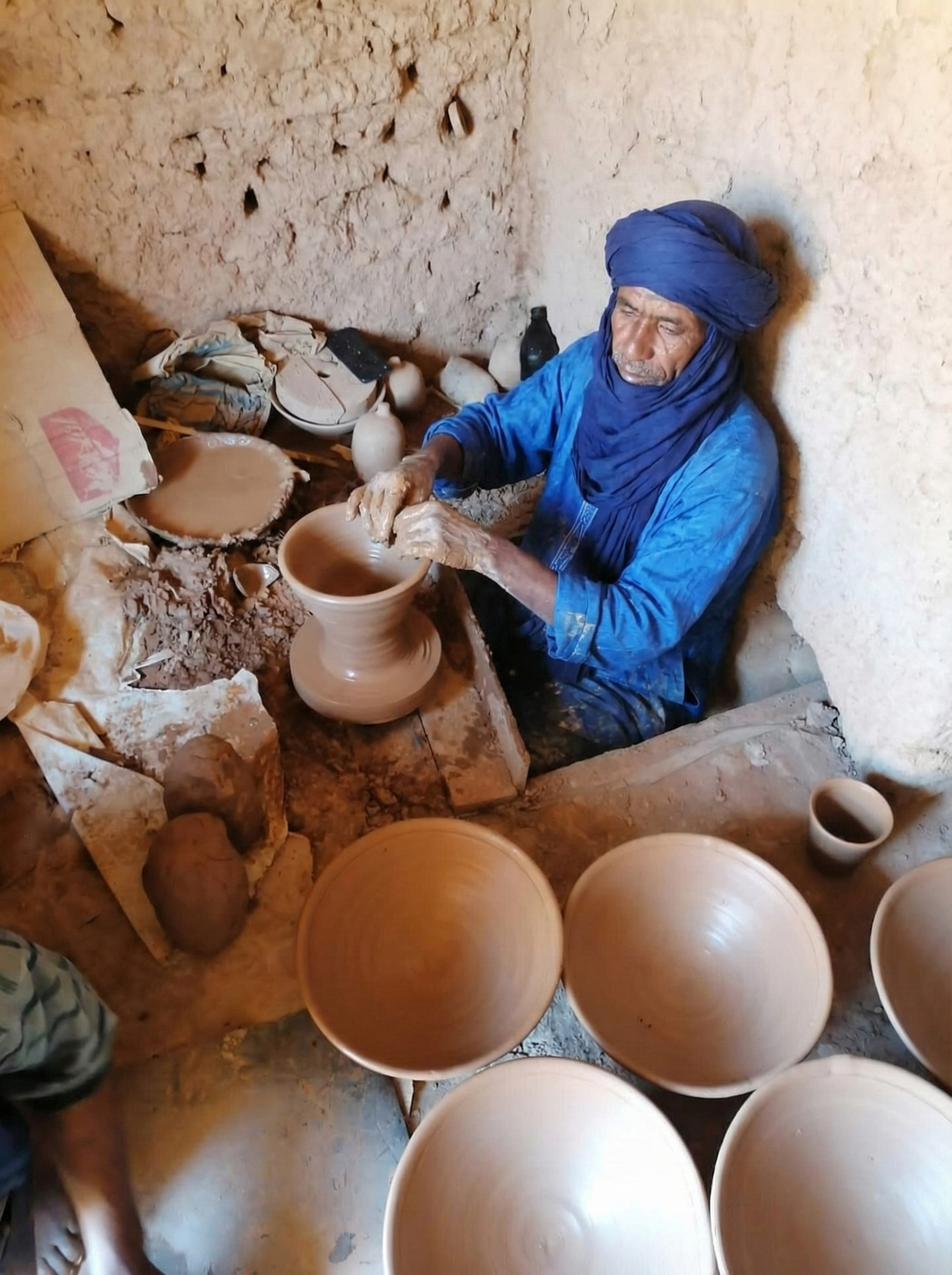
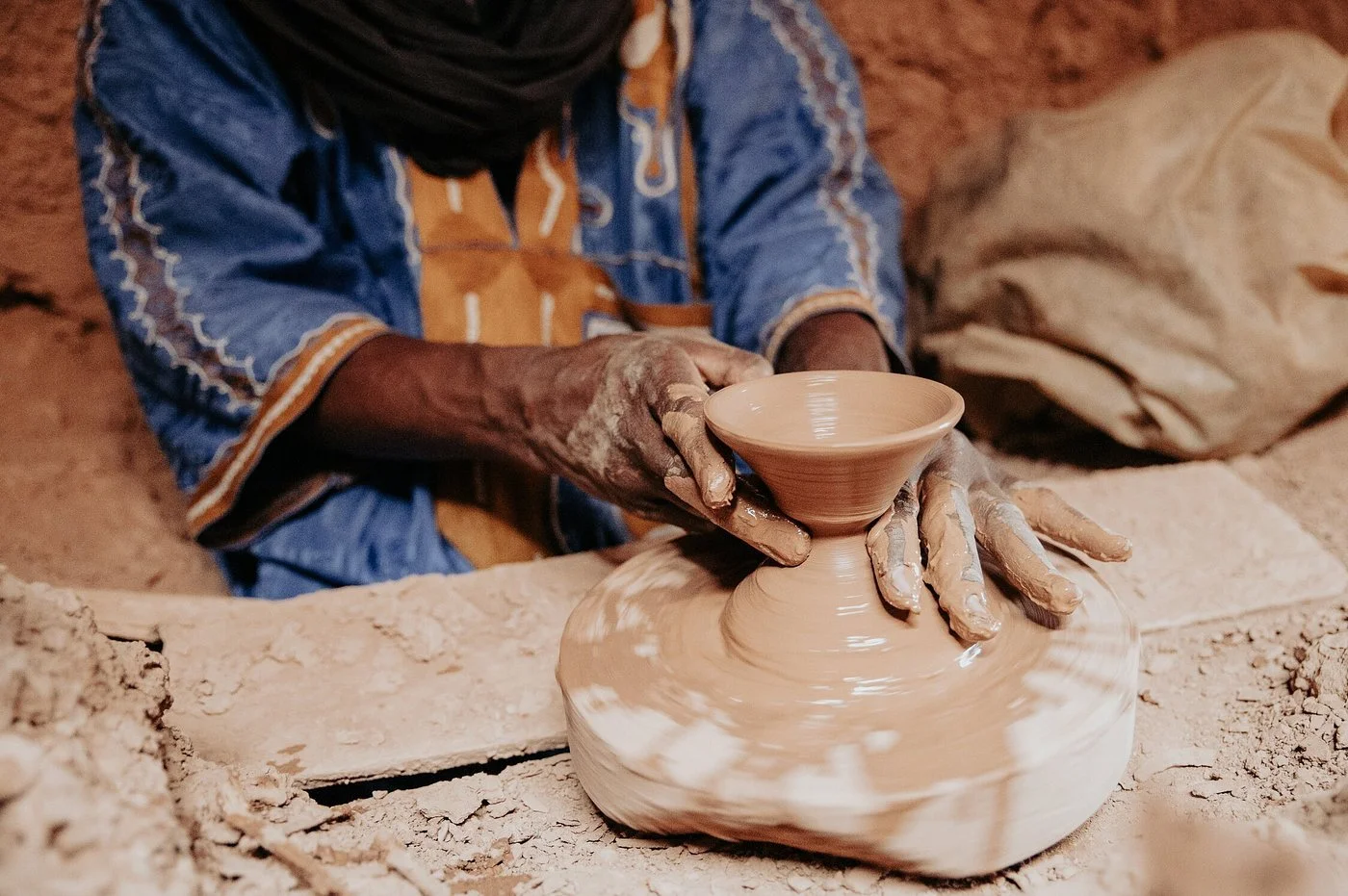
To understand the irregularity of Tamegroute forms, one must understand how they are thrown. Unlike European studios where the potter sits at a bench, the Tamegroute artisan works on a subterranean kick-wheel. The mechanism is buried in a deep pit in the floor, allowing the potter to sit at ground level while his legs hang into the cool earth below. This ancient ergonomic design protects the artisan from the searing Zagora heat, allowing for long hours of production. This physical position dictates the leverage and speed of the wheel, resulting in the thick walls and distinctively "heavy" bottom that characterizes authentic Tamegroute pottery.
How to Identify Authentic Tamegroute vs Hybrid Imitations
For the professional buyer, identifying authentic Tamegroute has become more complex due to recent market shifts in Marrakech. Initially, local workshops attempted to replicate the pottery from scratch but failed to reproduce the specific heavy clay composition of the Draa Valley. To bypass this, some sellers began purchasing the unglazed "biscuit" ware directly from Tamegroute cooperatives and transporting it to Marrakech.
Once in the city, these workshops apply a modern, industrial glaze color-matched to the traditional green or yellow. The result is a "hybrid" fake: the clay is authentic, but the finish is synthetic. Here is how you can differentiate the true wood-fired glaze from the industrial imitation:
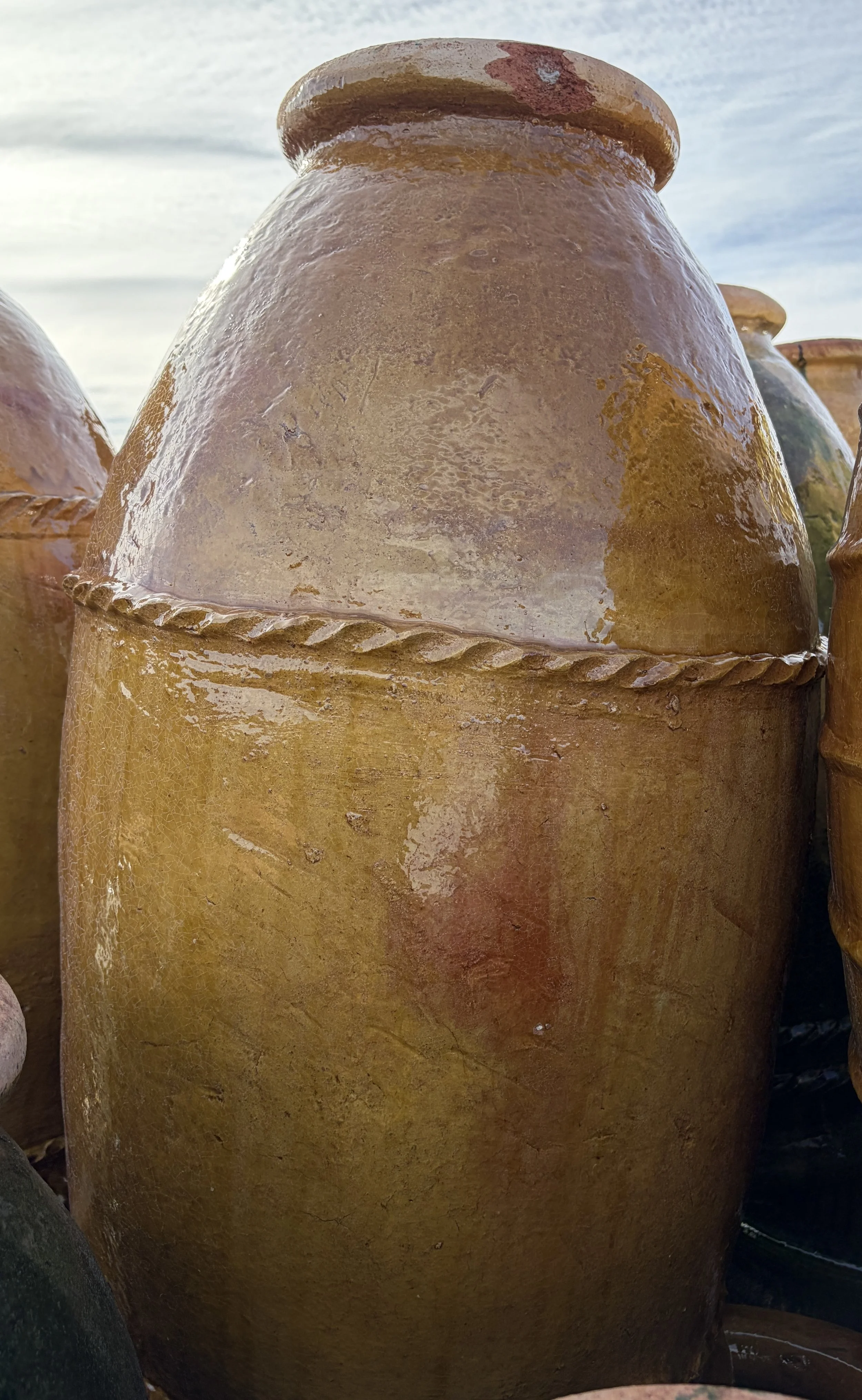
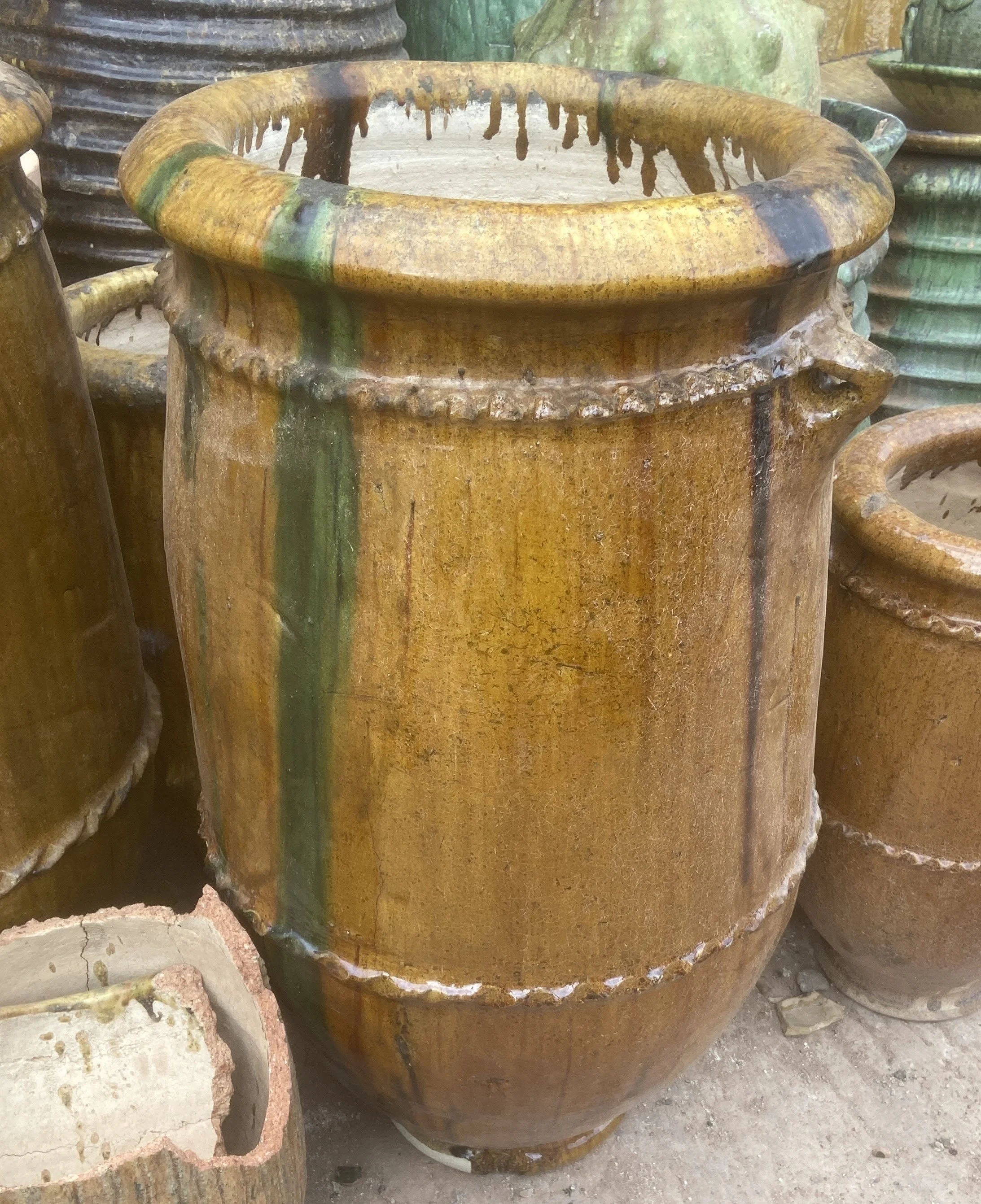
The "Flatness" of the Color: The authentic green glaze derives its complexity from copper oxide and manganese reacting violently in a wood-fired kiln (reduction atmosphere). This creates a metallic, iridescent depth where the color shifts from emerald to olive to brown. The industrial imitation is fired in gas kilns using stable chemical stains. The result is a flat, uniform "paint-like" green with zero variation or depth.
Surface Texture and Blistering: Authentic Tamegroute is famous for its imperfections. The barley flour binder and the volatile firing process create bubbles, blisters, and small craters on the surface. If the piece feels perfectly smooth or glassy to the touch, it is likely an industrial glaze applied in Marrakech.
The Drip Accumulation: Because the authentic glaze is thick and heavy, it runs down the vessel and "freezes" in thick droplets at the bottom. Industrial glazes are generally thinner and sprayed or dipped to ensure an even coat. If the glaze thickness is perfectly consistent from the rim to the base, it is not authentic.
The Three Scars: While both versions may show stilt marks, the authentic items often have rougher, more pronounced scars where the thick glaze tore away from the tripod. Industrial firings use more refined kiln furniture, leaving smaller or cleaner pin-marks.
Safety and Usage: A Professional Note
As your sourcing partner, we believe in total transparency regarding product safety. The traditional glaze recipe uses Galena (lead sulfide) as a flux to lower the melting temperature of the silica.
Because of the artisanal nature of the wood firing, we cannot guarantee that the lead is fully vitrified in every piece. Therefore, we recommend the following for your end clients:
Decorative Use: Perfect for vases, candle holders, and fruit displays.
Dry Food Only: Safe for bread, nuts, or whole fruits.
Avoid Acidic Foods: We advise against using vintage or traditional Tamegroute for serving acidic foods like salads with vinaigrette or hot soups, as the acid can interact with the glaze surface.
Sourcing with Confidence
The fragility of Tamegroute stoneware requires expert handling. The "wild" clay is more brittle than industrial ceramics. At our MoroccanStyled warehouse, we oversee a rigorous packing process involving custom crating and high-density padding to ensure these treasures survive the journey from the edge of the Sahara to your door.
Inquire now about Tamegroute Pottery :